Be Well Texas is UT Health San Antonio’s substance use disorder program. It is funded by Texas Health and Human Services, and it supports patients around the state.
But officials at Be Well Texas argue their approach to addiction recovery goes beyond medication and 12-step programs. They said their holistic approach means more paths to recovery.
Dr. Tara Wright, the senior director of Be Well Texas, explained the philosophy behind their approach.
“We really try to look at it from a more holistic perspective, of what does this patient need?” Wright said. “That’s why there’s case management in our clinic to figure out what do they need — do they need food vouchers, is there legal assistance, is there housing insecurity issues that are occurring? What are the problems that individual is facing? Because all of that contributes to the substance use disorder.”
The virtual and in-person clinic services are free for low-income Texans, but Wright and others realized that paying for the services wasn’t the only barrier between patients and treatment. Another huge issue was transportation.
So, in late December, Be Well Texas finalized a deal with Lyft Healthcare to offer free rides for patients to get to the San Antonio clinic, and to labs and pharmacies around the state.
When a patient needs to make a clinic appointment or get to labs or a pharmacy, they will call their case manager at Be Well Texas and provide them with a pick up and drop off location. Then, support staff will arrange the ride and provide the patient with a window of time that works for them. All the patient has to do is get to the right location, get in the car, and they’re on their way to critical services.
Richard Hamner, Be Well Texas’ program manager of recovery support services, said when he was dealing with the worst of his substance use disorders, having free access to transportation would have been a lifeline.
“I still had a warrant out for my arrest, I had to take care of those issues, I didn’t have a driver’s license, didn’t have a vehicle, couldn’t get around,” Hamner said. “I also had legal challenges and other things that came with that — so I had appointments to make, I had to meet with parole officers, I had classes to attend, not to mention outpatient [care]. I needed mental health services at the time, with the bipolar and depressive disorders that I also had. Had I had Lyft, that would have made making those appointments quite a bit easier.”

He said that when he was dealing with all of these issues 15 years ago, he had to rely on public transportation. It was a critical tool but it wasn’t adequate for his needs. He added that it remains inadequate for the needs of many dealing with substance use disorders. So he had to make hard choices about what parts of his life to tend to and which parts to neglect.
“When I have to make all of these different appointments, I’m probably going to either no-show or not make some of those appointments. And then I just have to prioritize what’s most important. Generally, medication, making those appointments, were low on the priority list. They were most important for me physically, but not legally.”
Claudia Draper, a practice manager at Be Well Texas, said about 40 people around the state utilized the free Lyft Healthcare services to get to appointments, pharmacies, and labs.
She explained that the initial contract with Lyft Healthcare is a year-long, with the likelihood of renewal.
Be Well Texas is also starting to subsidize recovery housing for 18- to 25 year olds dealing with substance use disorders, finding ways to get people connected to internet services, and working with people in prison so that they can be on a path to recovery by the time they get out.
Wright said part of the reason for all of these services is that the need for substance use disorder treatment is so great in Texas — and it’s only increasing.
“Since the year prior to the pandemic [to] the year after, we saw almost a 79% increase in overdoses in the state,” she said. “So it is a huge need in our state alone, so in San Antonio it’s just the same.”

She said Be Well Texas has grown to try to accommodate that need, going from nine employees four years ago to more than 90. With that growth, and a new clinic which is in use but has not yet had its grand opening, Wright said they’re able to accomplish more.
“This space means the world to us because what it means is we’re able to come together and do things like problem solve for our patients and ensure that we’re collaborating with all of our experts and program managers like Richard [Hamner] to come up with creative solutions to barriers our patients hit,” she explained.
One of those creative solutions is Be Well Texas’ peer to peer support services, inspired by Hamner’s own experience as someone in long-term recovery from substance use disorders.
“I was what they called a 'serial relapser.' I was in and out of all kinds of treatment programs — residential, outpatient, you name it, and none of those were really successful,” he explained.
He said it required engaging with multiple different types of programs, including faith-based counseling, a men’s accountability group and a 12-step support group before he really saw results. That’s what made him realize that no one method to recovery will work for all people, and in fact, many people will need numerous different methods simultaneously in order to make progress.
“Whether it be mental health treatment, substance use treatment, whether it be some kind of job training, GED, whatever that is that we can help connect them for," he said, "we’re there, and we can do those things.”
Texas Public Radio is supported by contributors to the Bioscience and Medicine News Desk including UT Health San Antonio and Dr. Johnny and Joni Reyna, supporting prostate cancer research and early detection to save lives.
Contact: Steven Lee, 210-450-3823, lees22@uthscsa.edu
SAN ANTONIO, Feb. 2, 2023 – A patient with a substance use disorder in a rural town outside Houston recently needed lab work done before she could be prescribed medication for her treatment. But she didn’t have a ride to the lab.
Not a problem, as it turned out. Be Well Texas, a program of UT Health San Antonio that treats patients statewide for opioid and other substance use disorders, arranged for Lyft to pick her up at home and take her to the lab and back home again. And all free of charge to the patient.
UT Health San Antonio, on behalf of Be Well Texas, entered into an agreement with Lyft Healthcare to provide transportation for patients in need to its clinic in San Antonio, but also for telehealth patients anywhere in the state who need rides to the lab or the pharmacy. Lyft Healthcare is the ride-hailing company’s service for health care patients. The agreement is fulfilling an urgent need.
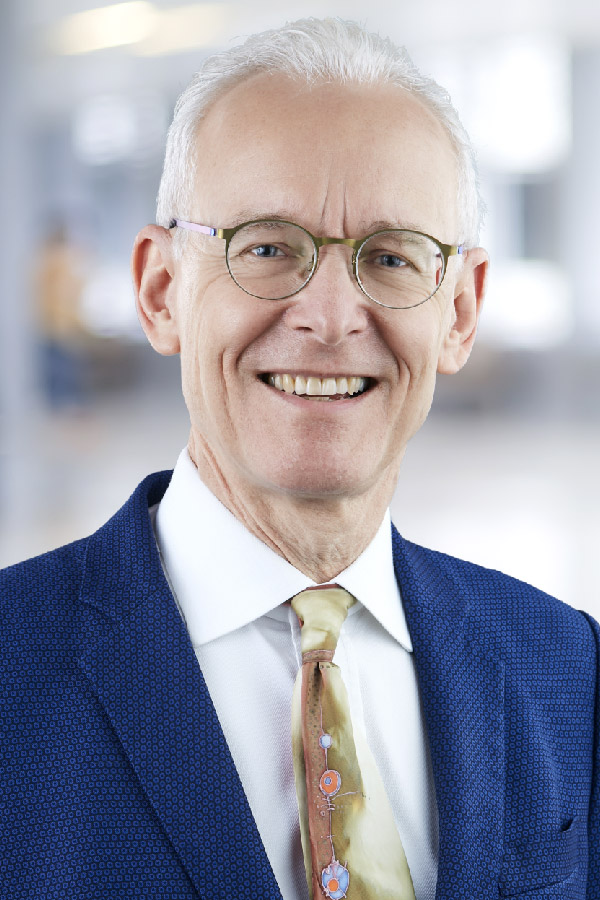
“About 30% or more of our patients lack transportation,” said Van King, MD, DFAPA, FASAM, medical director with Be Well Texas. “Others have transportation but are limited with their funds because they work part-time, just started working or just lost their job. They have to be very mindful of how they spend their money, and that obviously includes transportation. This helps our patients whose budgets are limited.”
Be Well Texas, funded by Texas Health and Human Services, provides treatment and resources statewide virtually, and in-person at its clinic in San Antonio’s South Texas Medical Center, at 5109 Medical Drive. Patients who are seen by virtual visits statewide additionally can get a ride for follow-up appointments with a primary care physician, if a Be Well Texas provider determines those are medically necessary.
Under the agreement, Be Well Texas is offering access to rides for all patients age 18 or older regardless of their ability pay. Lyft Healthcare ensures compliance with HIPAA and federal and state regulatory requirements to protect patient privacy and to ensure health care rides are handled in a lawful manner.
Be Well Texas personnel are trained in requesting rides for a patient, and can do so for those who do not have reliable transportation or resources to travel to clinic, lab and pharmacy visits – and for those who might not even have a permanent physical address. “We do have homeless patients who are in need,” said Claudia Draper, MBA, a practice manager with Be Well Texas. “We have a patient who came in recently who’s homeless and he would walk and ride the bus to get to our clinic.”
The ride service is limited to medically necessary appointments and laboratory and pharmaceutical services required for treatment for patients of Be Well Texas. For more information, visit https://bewelltexas.org, or call the clinic at (888) 85 Be Well, (888) 852-3935.
The University of Texas Health Science Center at San Antonio (UT Health San Antonio), is one of the country’s leading health science universities and is designated as a Hispanic-Serving Institution by the U.S. Department of Education. With missions of teaching, research, patient care and community engagement, its schools of medicine, nursing, dentistry, health professions and graduate biomedical sciences have graduated more than 41,100 alumni who are leading change, advancing their fields and renewing hope for patients and their families throughout South Texas and the world. To learn about the many ways “We make lives better®,” visit UTHealthSA.org.
Stay connected with The University of Texas Health Science Center at San Antonio on Facebook, Twitter, LinkedIn, Instagram and YouTube.
SAN ANTONIO, Dec. 13, 2022 – With the U.S. grappling with an unprecedented opioid-related overdose crisis, The University of Texas Health Science Center at San Antonio (UT Health San Antonio) has been been awarded a $1.8 million grant from the National Institutes of Health to research peer recovery support services for people living with opioid use disorder.
While medication for opioid use disorder can reduce rates of disease or deaths, data suggests that certain support services both aid treatment and sustain long-term recovery.
Those services can include emerging “peer” support, in which individuals with lived experience in addiction have specialized training in supporting others during their recovery by providing non-clinical linkages to treatment – such as mentorship, referrals for medical illnesses, occupational training, housing and education. However, there are gaps in knowledge of the approach that limit broader adoption.
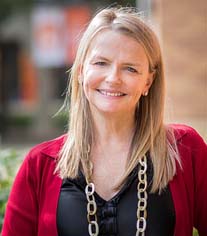
“This is what this new grant funding is designed to address,” said Jennifer Sharpe Potter, PhD, MPH, Senior Executive Vice President for Research and professor of psychiatry and behavioral sciences at UT Health San Antonio, and a principal investigator for the NIH grant funding along with Robert Ashford, PhD, CEO of RecoveryLink, a recovery support technology company. Potter also is executive director of Be Well Texas, a statewide initiative of UT Health San Antonio funded by Texas Health and Human Services, providing equitable access to treatment and care for substance use disorder (SUD).
“We propose a research network that will provide systematic integration and collaboration between researchers and community-based organizations and develop a pipeline of future recovery scientists to close empirical and practice gaps in peer recovery support services, or PRSS,” she said.
Focus on stakeholder engagement
A lot is at stake with the effort, amid a backdrop of 107,000 opioid-related drug overdose deaths in the U.S. in the 12 months ending in January 2022, according to the Centers for Disease Control.
The Peer Recovery Innovation Network, the name of the new research network under the grant effort, will focus on stakeholder engagement in research agenda-setting, enhance the infrastructure for PRSS recovery science research and accelerate the growth of the PRSS evidence base in priority areas and populations, with training and telementoring as key approaches.
“We will utilize the innovative Extension for Community Healthcare Outcomes, ECHO, model,” said Adrienne Lindsey, DBH, MA, director of the Center for Substance Use Training and Telementoring at UT Health San Antonio. “This telementoring model will be used to expose researchers and clinicians interested in recovery support services and recovery science to the latest research findings and best practice, as well as provide a platform to vet research works in progress to get critical feedback from colleagues and subject matter experts in a budding field.”
Expanding recovery science
The effort will expand recovery science by developing a research program on PRSS during medication for opioid use disorder treatment using a novel research agenda-setting approach and an associated collaborative process, training and mentoring, and infrastructure development.
Specific aims include:
“We believe all this will inform development and expansion of services and strengthen the system of care that those with opioid use disorder may use to initiate and maintain recovery,” Potter said.
The University of Texas Health Science Center at San Antonio (UT Health San Antonio), a primary driver of San Antonio’s $44.1 billion health care and biosciences sector, is the largest research institution in South Texas with an annual research portfolio of $360 million. Driving substantial economic impact with its six professional schools, a diverse workforce of more than 7,900, an annual operating budget of $1.08 billion and clinical practices that provide 2.6 million patient visits each year, UT Health San Antonio plans to add more than 1,500 higher-wage jobs over the next five years to serve San Antonio, Bexar County and South Texas. To learn about the many ways “We make lives better®,” visit UTHealthSA.org.
Stay connected with The University of Texas Health Science Center at San Antonio on Facebook, Twitter, LinkedIn, Instagram and YouTube.
UT Health San Antonio contact: Steven Lee, 210-450-3823, lees22@uthscsa.edu
Hill Country MHDD contact: Kelsi Wilmot, 830-370-6302, kelsi8310@hillcountry.org
SAN ANTONIO, Dec. 7, 2022 – Be Well Texas, a statewide initiative of UT Health San Antonio, and Hill Country Mental Health & Developmental Disabilities Centers have entered into an agreement to provide substance use disorder (SUD) treatment services to Uvalde residents.
They will jointly provide on-demand, 24/7 access to a virtual navigation hub for peer recovery support services, behavioral health screening, case management and crisis services.
Be Well Texas, funded by Texas Health and Human Services, provides resources virtually, or in-person upon request, regardless of ability to pay. The new services in Uvalde come at a pivotal time, following the tragic shootings earlier this year at Robb Elementary School.
“We knew that people were struggling with their mental health in Uvalde, and there has been a behavioral health care response, but often after a tragedy, substance use disorder will follow,” said Jennifer Sharpe Potter, PhD, MPH, Senior Executive Vice President for Research and professor of psychiatry and behavioral sciences at UT Health San Antonio, and executive director of Be Well Texas.
“We anticipate the degree of substance misuse to increase in the community of Uvalde,” said Tod Citron, chief executive officer of Hill Country MHDD Centers. “We understand that the risk of developing a substance use disorder is significantly greater when a loss is traumatic or occurs under traumatic circumstances. We are prepared to offer support to those who are struggling with substance misuse, whether drug- or alcohol-related.”
Under the agreement with Hill Country MHDD Centers, which has a location in Uvalde, Be Well Texas will offer medication and management for SUD, psychiatric evaluations, laboratory tests, and individual and family therapy, in addition to case management and peer recovery support services with professionals with shared addiction experiences.
The services, including medication and labs for treatment, will be offered at no cost to patients who qualify.
Hill Country MHDD Centers will provide assessments for those individuals who present for services and screen positive for substance misuse in the Uvalde community. The organization will be working with Be Well Texas to provide further assessment and treatment services that include medication assistance, counseling, family education and other services that promote recovery.
The University of Texas Health Science Center at San Antonio (UT Health San Antonio), a primary driver of San Antonio’s $44.1 billion health care and biosciences sector, is the largest research university in South Texas with an annual research portfolio of $350 million. Driving substantial economic impact with its five professional schools, a diverse workforce of more than 7,000, an annual operating budget of more than $1 billion and a clinical practice that provides more than 2 million patient visits each year, UT Health San Antonio plans to add more than 1,500 higher-wage jobs over the next five years to serve San Antonio, Bexar County and South Texas. To learn about the many ways “We make lives better®,” visit http://uthscsa.edu.
Stay connected with The University of Texas Health Science Center at San Antonio on Facebook, Twitter, LinkedIn, Instagram and YouTube.
Hill Country MHDD Centers serves the greater Texas Hill Country Region, including 19 counties: Bandera, Blanco, Comal, Edwards, Gillespie, Hays, Kendall, Kerr, Kimble, Kinney, Llano, Mason, Medina, Menard, Real, Schleicher, Sutton, Uvalde and Val Verde. With a mission of Promoting Independence, Community Integration, and Recovery, Hill Country MHDD Centers has 22 locations, including 14 Mental Health Clinics and 8 Developmental Disability Centers serving a population of over 630,000 within a 22,593 square mile area. To find out more about our services, please visit www.hillcountry.org.
Be Well Texas, UT Health San Antonio’s substance use disorder response program, will use a $2 million federal grant to expand opioid use disorder treatment in rural Texas counties.
Many rural counties in Texas have opioid use rates that are two to three times higher than urban counties, according to data analyzed by the Washington Post. That’s coupled with what Bee Courtois says is a real lack of resources to handle opioid addiction.
Courtois is the program manager of Be Well Texas and the director of the grant project.
“Texas has had a significant issue with opioid use, and in particular rural counties,” she said. “And again, that just goes back to the issue of lack of resources in those rural communities.”
Courtois said Be Well Texas essentially acts as a funnel to get funds to opioid treatment efforts around Texas by partnering with local organizations. The funds for this grant will be devoted to the 178 federally-designated rural counties.
“This grant will allow us the opportunity to work on building a responsive behavioral health care delivery system with a focus on reducing the morbidity and mortality of opioid use disorder among rural Texas residents,” she said.
The grant will fund telehealth, in-person treatment, and recovery support services for those suffering from opioid use disorder.
Courtois said opioid use disorder is a growing problem in Texas, and especially rural counties, partly driven by the availability of heroin and the rise in the use of fentanyl — sometimes by accident.
“You, at times, have individuals that are not aware that something may be laced with fentanyl,” she said.
Recently, Gov. Greg Abbott signaled he supported decriminalizing fentanyl testing strips, which can be used to test drugs to see if they have fentanyl in them. He was previously against decriminalizing the test strips.
Courtois said one way Be Well Texas has tried to support those dealing with addiction is by providing housing.
“We recently set up some recovery housing for individuals with a substance use disorder who are in need of housing and are engaged in treatment,” she said.
This effort is focused on the 18 to 25 age group, which she says was identified as the age group most in need of this kind of support.
According to UT Health, Be Well Texas already supports 10,000 adults every year, but now they’ll be able to reach people who have struggled to access health care.
“The biggest challenge is access to care, transportation, and funding — these residents not having the financial means to access care,” Courtois said.
She said one method they’re using to remove that barrier is Be Well Texas’ telehealth clinic, which they can utilize to reach people who may not be able to take the time to drive to the nearest in-person clinic.
Courtois added that destigmatizing opioid use disorder would be a major step in tackling the crisis.
“It is a chronic disease, similar to high blood pressure [or] diabetes, however, it is not seen in the same light,” she said. “And because there is so much stigma and bias, it compounds the challenge for individuals that are dealing with this to seek help because of fear of that very stigma.”
Texas Public Radio is supported by contributors to the Bioscience and Medicine News Desk including UT Health San Antonio and Dr. Johnny and Joni Reyna, supporting prostate cancer research and early detection to save lives.
Four-year, $2 million federal grant will more than double rural providers
Contact: Steven Lee, 210-450-3823, lees22@uthscsa.edu
SAN ANTONIO, Dec. 1, 2022 – UT Health San Antonio has received a four-year, $2 million federal grant to expand its substance use disorder response program, Be Well Texas, to the state’s 178 rural counties that have limited or no access to resources and support addressing opioid addiction.
With the Health Resources and Services Administration (HRSA) grant, Be Well Texas will lead and assist a consortium of 28 rural provider organizations in building a responsive behavioral health care delivery system with the capacity to reduce the morbidity and mortality of opioid use disorder, or OUD, among Texas’ rural residents.
That will more than double Be Well Texas’ current provider network of 12 rural providers. The growth coupled with Be Well Texas’ telehealth capacity will ensure the availability of opioid use disorder treatment services in all of the state’s rural counties.
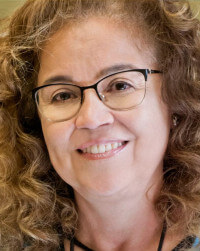
“Deaths from opioid-related overdose are one of the greatest health failures of our time, and partially attributable to unfairly distributed treatment resources,” said Briseida “Bee” Courtois, MSW, LCDC, Be Well Texas provider network program manager and director of this grant project. “These types of need disparities led UT Health San Antonio to launch the Be Well Texas network.”
A rural disparity
That disparity appears to be more pronounced in rural than in urban areas. More opioid prescriptions are dispensed to Texas’ rural residents per-capita than to urban residents, which likely has become a source of supply for illegal drug markets and contributor to increasing overdose rates.
For example, while opioid pills were distributed at a rate of 29.4 per person living in Bexar County each year from 2006 through 2014, the rate was 88.3 in Young County in North Texas, according to a Washington Post analysis of a database maintained by the U.S. Drug Enforcement Administration.
Other rural counties: Childress (76.2), Wilbarger (75.2), Brown (68.1), Palo Pinto (66.9).
Bexar County’s number was similar to other urban areas: Harris (35.6), Dallas (28.6), Travis (26.0), El Paso (16.3).
Opioid death rates in Texas might actually be higher than thought since the majority of the state’s rural counties do not report opioid-related mortality. This coupled with the fact that state data systems do not distinguish between urban and rural overdose deaths make it difficult to quantify the number of opioid-related deaths in Texas’ rural counties.
The new rural consortium will be a subset of the existing statewide Be Well Texas program, currently serving more than 10,000 adults annually and consisting of 76 contracted Medication-Assisted Treatment (MAT) and/or Office-Based Opioid Treatment (OBOT) providers delivering substance use treatment – for opioid use, alcohol use, stimulant use and other substance use disorders – as well as non-severe mental health treatment and peer recovery supports. Commonly used substances include prescription and synthetic opioids, including fentanyl, and heroin.
Aligning with HRSA goals
The consortium’s objective aligns with the goals of HRSA’s Rural Communities Opioid Response Program-Behavioral Health Care Support: to build capacity to deliver low-barrier, digital and/or in-person OUD treatment and recovery support services according to participant needs and preferences.
Key strategies are:
SAN ANTONIO (May 12, 2022) — Despite scientific evidence that the medication buprenorphine/naloxone (or Suboxone) effectively treats opioid use disorder (OUD), only one-sixth of Texas clinicians surveyed in 2019 and early 2020 said they were prescribing the lifesaving medication, according to a study from The University of Texas Health Science Center at San Antonio (UT Health San Antonio) published May 12 in JAMA Network Open.
“The U.S. Food and Drug Administration approved buprenorphine in 2002. It’s 2022 and we still see problems,” said Jennifer Sharpe Potter, PhD, MPH, the study senior author. Dr. Potter is a professor of psychiatry and behavioral sciences, executive director of Be Well Texas, and vice president for research at UT Health San Antonio.
“Unfortunately, our data are consistent with reports using other methods that suggest lack of certified prescribers is a national problem,” Dr. Potter said.
The Drug Addiction Treatment Act (DATA) of 2000 made it possible for health care workers to obtain an “X-waiver” to prescribe buprenorphine. To be eligible, physicians needed to complete eight hours of qualified training before prescribing buprenorphine, and advanced practice providers including physician assistants, clinical nurse specialists and nurse practitioners needed to complete 24 hours of training.
UT Health San Antonio researchers sent surveys to more than 600 clinicians who attended X-waiver training courses offered statewide between March 2019 and February 2020. The team received responses from 126 clinicians, including 81 physicians, 37 nurse practitioners and eight physician assistants.
Among the 126 respondents, less than half (61) had received an X-waiver after attending the waiver training. Of those, almost two dozen were prescribing buprenorphine. Only 17% of survey respondents (22 of 126) were prescribing the lifesaving medication after attending the X-waiver training. This study contributes new evidence that X-waiver training is only part of the puzzle when it comes to understanding the barriers that clinicians must overcome to begin prescribing buprenorphine.
Policy change last year
During the COVID-19 pandemic, in April 2021, the U.S. Department of Health and Human Services published new practice guidelines to reduce the training burden for treating opioid use disorder with buprenorphine. According to the U.S. Substance Abuse and Mental Health Services Administration website, the revised guidelines “exempt eligible practitioners from certification requirements related to training and the provision of psychosocial services, which were previously necessary when dispensing or prescribing buprenorphine for the treatment of OUD to 30 or fewer patients.”
More than relief of training burden is needed
Dr. Potter and the team believe more than this exemption is needed to expand access to best practices in OUD care. Obstacles to adoption cited by survey respondents included, “Complexity of the X-waiver process,” “Perceived lack of professional support and referral network,” and “Getting started with prescribing buprenorphine.”
“The failure to treat OUD is part of the reason that we have the current rate of overdose deaths,” Dr. Potter said. “At a time of unprecedented opioid-related overdose deaths, there is now relief from the training burden of obtaining the X-waiver to prescribe buprenorphine, a medication that reduces the risk of overdose by 50%.”
A demonstrated need
Nearly 1,900 opioid overdose deaths were documented in Texas in 2020, according to the National Center for Health Statistics. In the JAMA Network Open paper, the authors cited sources that stated:
“If we are going to address the epidemic levels of overdose from drugs in the United States, we need to implement a comprehensive approach that includes making it easier for clinicians to treat OUD and reduce the burdens on providing this level of care,” Dr. Potter said.
“We can’t just provide relief from the waiver,” she added. “We must provide support so that clinicians know how to incorporate this into their practices in a way that is feasible for them.”
Survey of Barriers and Facilitators to Prescribing Buprenorphine and Clinician Perceptions on the Drug Addiction Treatment Act of 2000 Waiver
Holly J. Lanham, PhD, MBA; Jennifer Papac, MD; Daniela I. Olmos, BA; Emily L. Heydemann, MSW; Nathalia Simonetti, BS; Susanne Schmidt, PhD; Jennifer S. Potter, PhD, MPH
First published: May 12, 2022, JAMA Network Open
https://jamanetwork.com/journals/jamanetworkopen/fullarticle/2792215
The University of Texas Health Science Center at San Antonio (UT Health San Antonio) is a primary driver for San Antonio’s $42.4 billion health care and biosciences sector, the city’s largest economic generator. Driving substantial economic impact with its five professional schools, a diverse workforce of 7,200, an annual operating budget of more than $1 billion and a clinical practice that provides more than 2 million patient visits each year, UT Health San Antonio plans to add more than 1,500 higher-wage jobs over the next five years to serve San Antonio, Bexar County and South Texas. UT Health San Antonio is the largest research university in South Texas with an annual research portfolio of approximately $350 million. To learn about the many ways “We make lives better®,” visit http://www.uthscsa.edu.
Stay connected with The University of Texas Health Science Center at San Antonio on Facebook, Twitter, LinkedIn, Instagram and YouTube.
SAN ANTONIO, Nov. 17, 2021 — In partnership with UT Health San Antonio, Be Well Texas, a new statewide addiction medicine treatment option, has launched virtual services for those seeking recovery from substance use disorders (SUDs) and mental health challenges.
Through telehealth and in-person visits, services are delivered under the supervision of board-certified physicians in addiction medicine and psychiatry, and include SUD assessment, psychiatric evaluation, evidence-based counseling, medication management, peer recovery support, case management, and pharmacy and lab services throughout Texas.
Be Well Texas is the first addiction medicine virtual clinic established by UT Health San Antonio and is the first of its kind in Texas with a no-pay option.
Be Well Texas founder Jennifer Potter, PhD, MPH, vice president for research (interim) and professor of psychiatry at UT Health San Antonio, sees the clinic as a first stop on the road to recovery, regardless of ability to pay. “Be Well Texas removes the barrier of cost, the physical barrier of distance and the social barrier of negativity surrounding addiction. Our specialists deeply understand the challenges of addiction and are eager to listen,” Dr. Potter said. “Some of them have gone through it themselves and can relate directly to their patients.”
Tackling the opioid crisis during COVID
Solutions like the Be Well Texas virtual clinic are urgently needed as the COVID-19 pandemic exacerbates the opioid crisis. Many suffering from addiction remain in isolation and have been cut off from traditional support networks. According to Centers for Disease Control and Prevention estimates, more than 4,000 people died of drug overdoses in 2020 in Texas, a 33% increase from the year before.
Be Well Texas’ innovative solutions are made possible through a contract with Texas Health and Human Services.
The University of Texas Health Science Center at San Antonio, also known as UT Health San Antonio, is a premier academic research center that makes lives better through excellence in education, research, health care and community engagement. Be Well Texas is partnering with UT Health Physicians, the medical practice of the Joe R. and Teresa Lozano Long School of Medicine.
Contact Be Well Texas at 1-833-778-2571 or https://BeWellTexasClinic.org.
The University of Texas Health Science Center at San Antonio, also referred to as UT Health San Antonio, is one of the country’s leading health sciences universities and is designated as a Hispanic-Serving Institution by the U.S. Department of Education. With missions of teaching, research, patient care and community engagement, its schools of medicine, nursing, dentistry, health professions and graduate biomedical sciences have graduated 39,700 alumni who are leading change, advancing their fields, and renewing hope for patients and their families throughout South Texas and the world. To learn about the many ways “We make lives better®,” visit www.uthscsa.edu.
Stay connected with The University of Texas Health Science Center at San Antonio on Facebook, Twitter, LinkedIn, Instagram and YouTube.
FRIDAY, May 13, 2022 (HealthDay News) -- The growth in the number of clinicians with waivers to prescribe buprenorphine slowed during the pandemic, and support and mentorship are needed to facilitate obtaining a waiver, according to two studies published online May 12 in JAMA Network Open.
Joanne Spetz, Ph.D., from the University of California in San Francisco, and colleagues examined the number of clinicians with waivers to prescribe buprenorphine for opioid use disorder before and during the COVID-19 pandemic. The researchers found that 47,912 clinicians had waivers to prescribe buprenorphine in quarter (Q)2 of 2018 (84.3 percent physicians) compared with 99,481 clinicians in Q4 of 2021 (69.4 percent physicians). The number of waivers grew at a mean of 4,234 per quarter before the pandemic compared with 3,133 per quarter during the pandemic.
Holly J. Lanham, Ph.D., from the University of Texas Health Science Center San Antonio, and colleagues examined barriers and facilitators of obtaining an X-waiver and prescribing buprenorphine in a survey study conducted between September and December 2020. The researchers found that 48.4 percent of the 126 clinicians who responded had received an X-waiver; of these, 36 and 64 percent were and were not prescribing buprenorphine, respectively. Significantly different barriers among waivered and nonwaivered clinicians included the complexity of the X-waiver process, perceived lack of professional support and a referral network, and getting started. Significantly different barriers experienced by prescribers and nonprescribers were getting started and accessing reimbursement for treatment. Facilitators mentioned most frequently were changes to the waiver training and the need for networks connecting experienced clinicians with those starting out.
"Clinicians need ongoing support and mentorship from experienced and knowledgeable clinicians throughout the X-waiver and prescribing processes," Lanham and colleagues write.
SAN ANTONIO - The opioid crisis has been front and center in recent years, but methamphetamine addictions - and overdoses - may be an even more pressing and overlooked problem in Texas.
"By the end of this year, over 4,000 Texans will have lost their lives to a drug overdose," says Dr. Jennifer Potter, vice president for research at UT Health San Antonio. "I would estimate based on the data that we’re seeing that about 30 percent of those involve methamphetamine."
Doctors at UT Health San Antonio have launched two clinical trials in an effort to come up with treatment options for meth addicts.
"Methamphetamine really doesn’t have a lot of solid, reliable evidence-based treatments," Dr. Potter says.
The first study began in March. Treatment as part of a clinical study for methamphetamine addicts includes up to five sessions a week for two months.
"It uses magnetic stimulation to actually provide the treatment," says Dr. Tara Karns-Wright, UT Health San Antonio assistant professor.
Sessions last just 18 minutes.
"We’re looking to see if this treatment will help people who struggle with methamphetamine or cocaine use, reduce their urge to use," says research assistant Kierstyn Gallegos.
The goal is to provide scientifically approved options beyond incentives like cash or prizes to entice addicts to change their behavior.
"Doctors and counselors want a lot of options in the tool bag," Dr. Potter says. "If you only pull out a wrench, all you’re going to have is a wrench and wrenches don’t always work for every problem."
The second study, also a multi-year effort, will begin in July and involve medications.
"Recovery is possible. That’s something that a lot of times people who use drugs, and their families, think is impossible," Dr. Potter says.
Since the pandemic began, addiction - and overdose deaths - have skyrocketed in Texas.
"We’ve seen a 22 percent rise in the number of overdose deaths related to opioids and methamphetamine," Dr. Potter says. "That should be alarming every community in Texas."
If you want to reduce or stop your meth use and are not currently in formal substance use treatment, you can join UT Health San Antonio's program by contacting the research team at 1-210-450-3760 or via email at stimulus@uthscsa.edu.,
Find out more about the Be Well, Texas Clinic by clicking here.