UT Health San Antonio contact: Steven Lee, 210-450-3823, lees22@uthscsa.edu
Hill Country MHDD contact: Kelsi Wilmot, 830-370-6302, kelsi8310@hillcountry.org
SAN ANTONIO, Dec. 7, 2022 – Be Well Texas, a statewide initiative of UT Health San Antonio, and Hill Country Mental Health & Developmental Disabilities Centers have entered into an agreement to provide substance use disorder (SUD) treatment services to Uvalde residents.
They will jointly provide on-demand, 24/7 access to a virtual navigation hub for peer recovery support services, behavioral health screening, case management and crisis services.
Be Well Texas, funded by Texas Health and Human Services, provides resources virtually, or in-person upon request, regardless of ability to pay. The new services in Uvalde come at a pivotal time, following the tragic shootings earlier this year at Robb Elementary School.
“We knew that people were struggling with their mental health in Uvalde, and there has been a behavioral health care response, but often after a tragedy, substance use disorder will follow,” said Jennifer Sharpe Potter, PhD, MPH, Senior Executive Vice President for Research and professor of psychiatry and behavioral sciences at UT Health San Antonio, and executive director of Be Well Texas.
“We anticipate the degree of substance misuse to increase in the community of Uvalde,” said Tod Citron, chief executive officer of Hill Country MHDD Centers. “We understand that the risk of developing a substance use disorder is significantly greater when a loss is traumatic or occurs under traumatic circumstances. We are prepared to offer support to those who are struggling with substance misuse, whether drug- or alcohol-related.”
Under the agreement with Hill Country MHDD Centers, which has a location in Uvalde, Be Well Texas will offer medication and management for SUD, psychiatric evaluations, laboratory tests, and individual and family therapy, in addition to case management and peer recovery support services with professionals with shared addiction experiences.
The services, including medication and labs for treatment, will be offered at no cost to patients who qualify.
Hill Country MHDD Centers will provide assessments for those individuals who present for services and screen positive for substance misuse in the Uvalde community. The organization will be working with Be Well Texas to provide further assessment and treatment services that include medication assistance, counseling, family education and other services that promote recovery.
The University of Texas Health Science Center at San Antonio (UT Health San Antonio), a primary driver of San Antonio’s $44.1 billion health care and biosciences sector, is the largest research university in South Texas with an annual research portfolio of $350 million. Driving substantial economic impact with its five professional schools, a diverse workforce of more than 7,000, an annual operating budget of more than $1 billion and a clinical practice that provides more than 2 million patient visits each year, UT Health San Antonio plans to add more than 1,500 higher-wage jobs over the next five years to serve San Antonio, Bexar County and South Texas. To learn about the many ways “We make lives better®,” visit http://uthscsa.edu.
Stay connected with The University of Texas Health Science Center at San Antonio on Facebook, Twitter, LinkedIn, Instagram and YouTube.
Hill Country MHDD Centers serves the greater Texas Hill Country Region, including 19 counties: Bandera, Blanco, Comal, Edwards, Gillespie, Hays, Kendall, Kerr, Kimble, Kinney, Llano, Mason, Medina, Menard, Real, Schleicher, Sutton, Uvalde and Val Verde. With a mission of Promoting Independence, Community Integration, and Recovery, Hill Country MHDD Centers has 22 locations, including 14 Mental Health Clinics and 8 Developmental Disability Centers serving a population of over 630,000 within a 22,593 square mile area. To find out more about our services, please visit www.hillcountry.org.
Four-year, $2 million federal grant will more than double rural providers
Contact: Steven Lee, 210-450-3823, lees22@uthscsa.edu
SAN ANTONIO, Dec. 1, 2022 – UT Health San Antonio has received a four-year, $2 million federal grant to expand its substance use disorder response program, Be Well Texas, to the state’s 178 rural counties that have limited or no access to resources and support addressing opioid addiction.
With the Health Resources and Services Administration (HRSA) grant, Be Well Texas will lead and assist a consortium of 28 rural provider organizations in building a responsive behavioral health care delivery system with the capacity to reduce the morbidity and mortality of opioid use disorder, or OUD, among Texas’ rural residents.
That will more than double Be Well Texas’ current provider network of 12 rural providers. The growth coupled with Be Well Texas’ telehealth capacity will ensure the availability of opioid use disorder treatment services in all of the state’s rural counties.
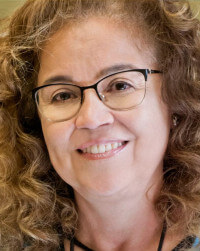
“Deaths from opioid-related overdose are one of the greatest health failures of our time, and partially attributable to unfairly distributed treatment resources,” said Briseida “Bee” Courtois, MSW, LCDC, Be Well Texas provider network program manager and director of this grant project. “These types of need disparities led UT Health San Antonio to launch the Be Well Texas network.”
A rural disparity
That disparity appears to be more pronounced in rural than in urban areas. More opioid prescriptions are dispensed to Texas’ rural residents per-capita than to urban residents, which likely has become a source of supply for illegal drug markets and contributor to increasing overdose rates.
For example, while opioid pills were distributed at a rate of 29.4 per person living in Bexar County each year from 2006 through 2014, the rate was 88.3 in Young County in North Texas, according to a Washington Post analysis of a database maintained by the U.S. Drug Enforcement Administration.
Other rural counties: Childress (76.2), Wilbarger (75.2), Brown (68.1), Palo Pinto (66.9).
Bexar County’s number was similar to other urban areas: Harris (35.6), Dallas (28.6), Travis (26.0), El Paso (16.3).
Opioid death rates in Texas might actually be higher than thought since the majority of the state’s rural counties do not report opioid-related mortality. This coupled with the fact that state data systems do not distinguish between urban and rural overdose deaths make it difficult to quantify the number of opioid-related deaths in Texas’ rural counties.
The new rural consortium will be a subset of the existing statewide Be Well Texas program, currently serving more than 10,000 adults annually and consisting of 76 contracted Medication-Assisted Treatment (MAT) and/or Office-Based Opioid Treatment (OBOT) providers delivering substance use treatment – for opioid use, alcohol use, stimulant use and other substance use disorders – as well as non-severe mental health treatment and peer recovery supports. Commonly used substances include prescription and synthetic opioids, including fentanyl, and heroin.
Aligning with HRSA goals
The consortium’s objective aligns with the goals of HRSA’s Rural Communities Opioid Response Program-Behavioral Health Care Support: to build capacity to deliver low-barrier, digital and/or in-person OUD treatment and recovery support services according to participant needs and preferences.
Key strategies are: